Appointment booking chat
Appointment booking chat lets customers ask about times in a conversation and see real availability read from the scheduling system, rather than a static list. With RoutMe, the agent reads availability through a read-only MCP tool and a flow holds the rules for anything that creates or changes a booking.
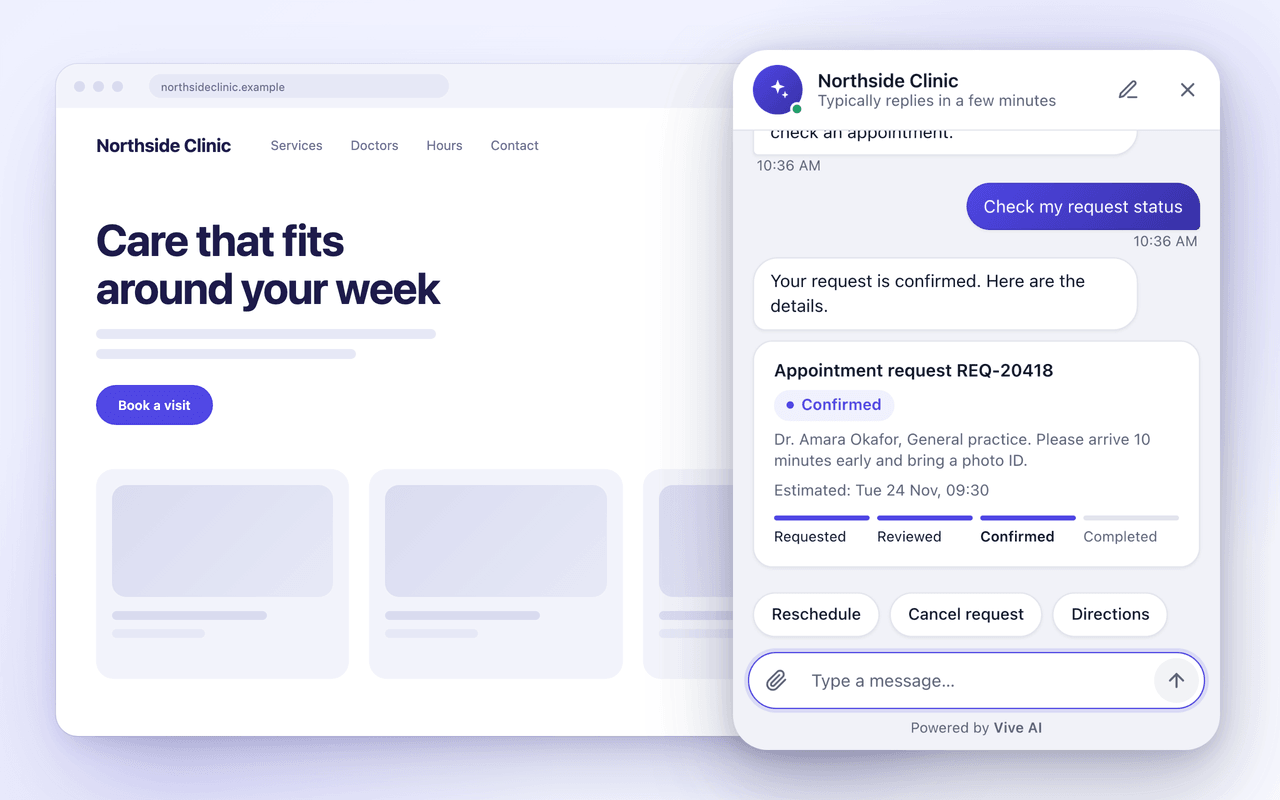
How it works
- Step 1
Customer asks for a time
In natural language on WhatsApp or website chat.
- Step 2
Agent reads availability
A read-only tool returns open slots.
- Step 3
Customer picks
Quick replies or a card present the options.
- Step 4
Booking step
Your own booking link or flow completes the reservation.
What you need
- A scheduling system with an API
- Rules for cancellations and changes
Related guides
- Human handoff best practices for AI supportDesign the handoff from an AI assistant to a person: clear triggers, full context, a warm message and a measured queue so customers never repeat themselves.
- How WhatsApp Business API pricing worksWhatsApp Business API pricing is based on message categories and conversation rules, not a flat seat fee. Learn the model and what else adds to the bill.
- WhatsApp Business App vs WhatsApp Business APIThe Business App suits small teams answering chats by hand, while the API powers automation, AI agents and shared inboxes. Learn the real trade-offs.
- AI chatbot for clinics and appointmentsWhat an AI chatbot can safely do for a clinic: show real availability, answer preparation questions, hand clinical questions to staff. No medical advice.
- AI chatbot for real estate agenciesAnswer listing questions, arrange viewings and capture enquiry details with an AI chatbot, while offers and contracts stay with a person.
- AI chatbot for travel and hospitality businessesHow hotels, tour operators and travel agencies can use an AI chatbot on WhatsApp and web chat: booking status, policies, check-in and clean handoff.
Frequently asked questions
Does it work for non-medical services?
Yes. Salons, repairs, consultations and viewings all follow the same lookup-then-confirm pattern.